
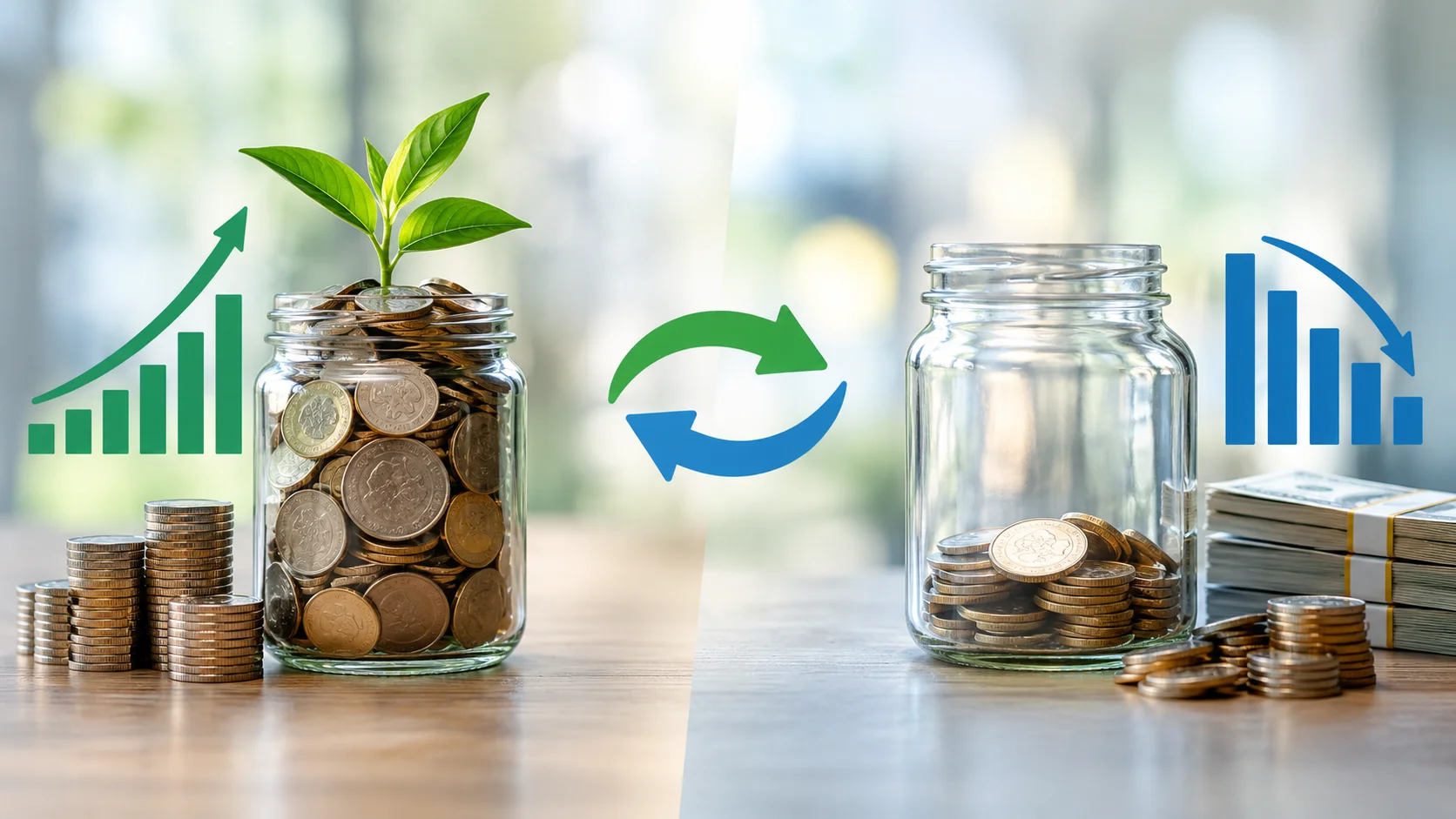
When you invest in an Exchange-Traded Fund (ETF) that holds dividend-paying stocks or interest-bearing bonds, the fund regularly collects cash from those underlying assets. But what happens to that cash next? Depending on the type of ETF you own, the fund manager will either pay that money out to you or automatically reinvest it on your behalf.
This fundamental choice comes down to understanding the difference between distributing and accumulating ETFs. While both types might hold the exact same basket of investments, the way they handle income can have a significant impact on your portfolio's growth, your taxes, and how much effort you need to put into managing your account.
What Are Distributing ETFs?
As the name suggests, distributing ETFs take the income generated by their underlying assets and pay it out to investors. These payments are typically made on a regular schedule, such as monthly, quarterly, or annually.
When a payout occurs, the cash simply appears in your brokerage account. From there, you have full control over what to do with it. You can withdraw the funds to pay for everyday living expenses, hold the cash in your account, or manually use it to buy different investments.
Steady cash flow: Ideal for investors who want to generate a passive income stream without selling their shares.
Total flexibility: You decide exactly where and when to deploy your dividend cash.
How Accumulating ETFs Work
In contrast, accumulating ETFs do not pay cash into your brokerage account. Instead, the fund manager automatically takes the dividends and interest earned and reinvests them straight back into the fund. This buys more shares of the underlying assets, which increases the total value of the ETF itself.
Because the cash is kept inside the fund, you won't see a dividend payment hit your account balance. Instead, the price of your ETF shares will naturally rise compared to a distributing version of the exact same fund. This automatic reinvestment is a seamless way to harness the power of compound growth without having to lift a finger.
Rule of Thumb: If you do not need the cash right now, automatically reinvesting your dividends is one of the most effective ways to accelerate your long-term wealth building.
The Tax Implications
Taxes are one of the most critical factors when choosing between these two ETF types, and the rules vary heavily depending on where you live.
In many European and international jurisdictions, accumulating ETFs can offer a major tax advantage. Because the dividends are never distributed to your personal account, some countries allow you to defer paying taxes on those dividends until you eventually sell your shares. This allows your money to compound faster without being dragged down by annual tax bills.
However, in some countries—most notably the United States—the tax authority treats reinvested dividends exactly the same as cash dividends. US investors are generally required to pay taxes on the income generated by the fund each year, even if the fund automatically reinvested it. Because of this, pure accumulating ETFs are rarely offered to US taxpayers, whereas they are extremely popular in Europe and elsewhere.
Comparing the Two Options
To help visualize the mechanical differences between these two fund types, here is a quick breakdown:
| Feature | Distributing ETFs | Accumulating ETFs |
|---|---|---|
| Dividend Handling | Paid out as cash to your account | Automatically reinvested by the fund |
| Cash Flow | Provides a regular income stream | No cash payouts |
| Share Price (NAV) | Drops slightly after a dividend is paid | Grows faster as dividends are absorbed |
| Best For | Retirees and income seekers | Long-term investors focusing on growth |
Which Should You Choose?
Your choice ultimately depends on your current financial goals and your location. If you are in the wealth-accumulation phase of your life—meaning you are working, saving, and investing for a future goal like retirement—an accumulating ETF is often the most efficient choice (where available). It removes the temptation to spend your dividends and saves you from paying potential transaction fees to manually reinvest the cash.
On the other hand, if you are retired, seeking financial independence, or simply need your portfolio to help pay your bills, distributing ETFs are the clear winner. They allow you to harvest the income your investments generate without having to constantly calculate how many shares you need to sell to fund your lifestyle.
Summary
Accumulating and distributing ETFs are simply two different wrappers for the same underlying investments. Distributing funds put cash in your pocket today, while accumulating funds put your cash to work for tomorrow. By aligning the reinvestment mechanics with your personal need for income and your local tax rules, you can make a choice that keeps your portfolio growing smoothly over time.