
Bond exchange-traded funds (ETFs) offer a straightforward way to add fixed-income investments to your portfolio. Instead of researching and buying individual bonds, a bond ETF allows you to purchase a diverse basket of bonds in a single trade, much like buying a stock.
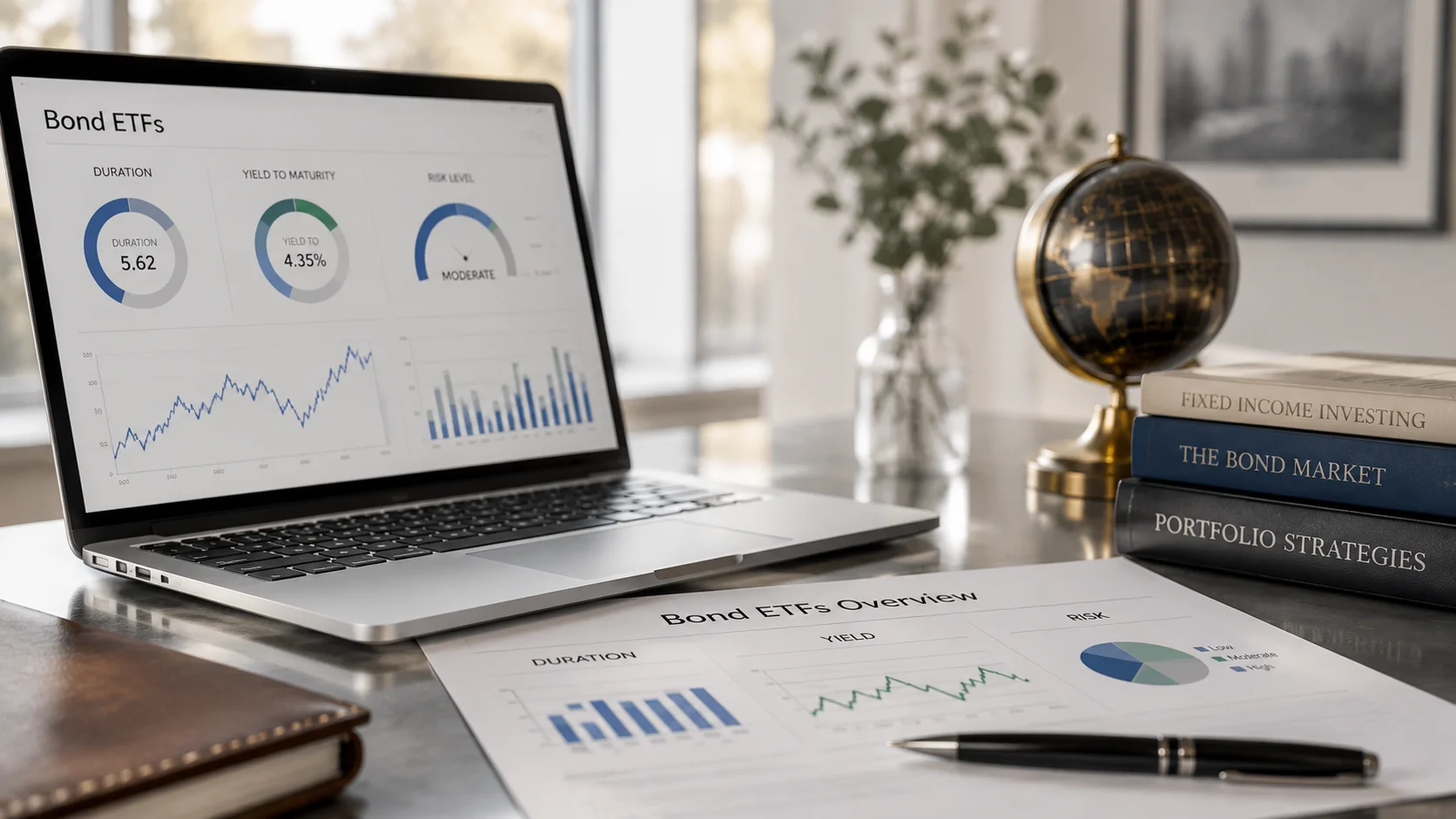
However, because bond ETFs hold dozens or even thousands of underlying bonds, they behave slightly differently than buying a single bond and holding it until it matures. To make the most of these funds, it helps to understand three core concepts: duration, yield, and credit risk.
How Bond ETFs Differ from Individual Bonds
When you buy an individual bond, it comes with a set maturity date. On that date, you typically receive your original principal back, assuming the issuer has not defaulted. You also collect fixed interest payments along the way.
Bond ETFs, on the other hand, do not have a single maturity date. The fund manager constantly buys and sells bonds to maintain a specific target profile, such as holding only short-term or long-term debt. Because the portfolio is always turning over, a bond ETF never truly "matures." This provides continuous exposure to the bond market, but it also means your principal fluctuates in value depending on broader economic conditions.
Understanding Bond ETF Yields
Yield is the income you earn from your investment, but bond ETFs often report multiple types of yield, which can be confusing for new investors. The two most common metrics you will encounter are:
SEC Yield: A standardized calculation created by the Securities and Exchange Commission. It reflects the income the fund generated over the most recent 30-day period, minus fund expenses. This is usually the best indicator of what the fund is currently earning.
Trailing 12-Month Yield: This measures the actual payouts made by the ETF over the past year. Because interest rates constantly change, this backward-looking metric might not reflect what the fund will pay in the future.
The Crucial Role of Duration
When investing in bonds, interest rate risk is a primary concern. When interest rates rise, existing bond prices fall, and vice versa. Duration is a metric used to measure exactly how sensitive a bond or bond ETF is to these interest rate changes.
Measured in years, duration tells you the approximate percentage a bond ETF's price will drop if interest rates rise by 1%. For instance, if an ETF has a duration of five years, a 1% increase in interest rates will typically cause the fund's price to drop by about 5%.
Rule of Thumb: Match the duration of a bond ETF to your investment timeline. If you need the money in three years, look for funds with a short duration of three years or less to minimize price volatility.
Assessing Credit Risk
Beyond interest rate risk, bond investors must also consider credit risk—the likelihood that the bond issuer will default on their payments. Bond ETFs clearly define the credit quality of the bonds they hold, generally falling into a few main categories.
Government bonds are considered the safest, while corporate bonds offer higher yields to compensate for higher risk. Here is a quick comparison of the most common bond ETF categories:
| Bond Type | Credit Risk | Typical Yield |
|---|---|---|
| U.S. Treasury | Very Low | Lower |
| Investment-Grade Corporate | Low to Moderate | Medium |
| High-Yield (Junk) Bonds | High | Higher |
Summary
Bond ETFs are highly effective tools for generating steady income and buffering your portfolio against stock market volatility. By paying close attention to a fund's SEC yield, matching its duration to your time horizon, and understanding the credit risk of its underlying holdings, you can build a resilient fixed-income allocation tailored to your financial goals.