
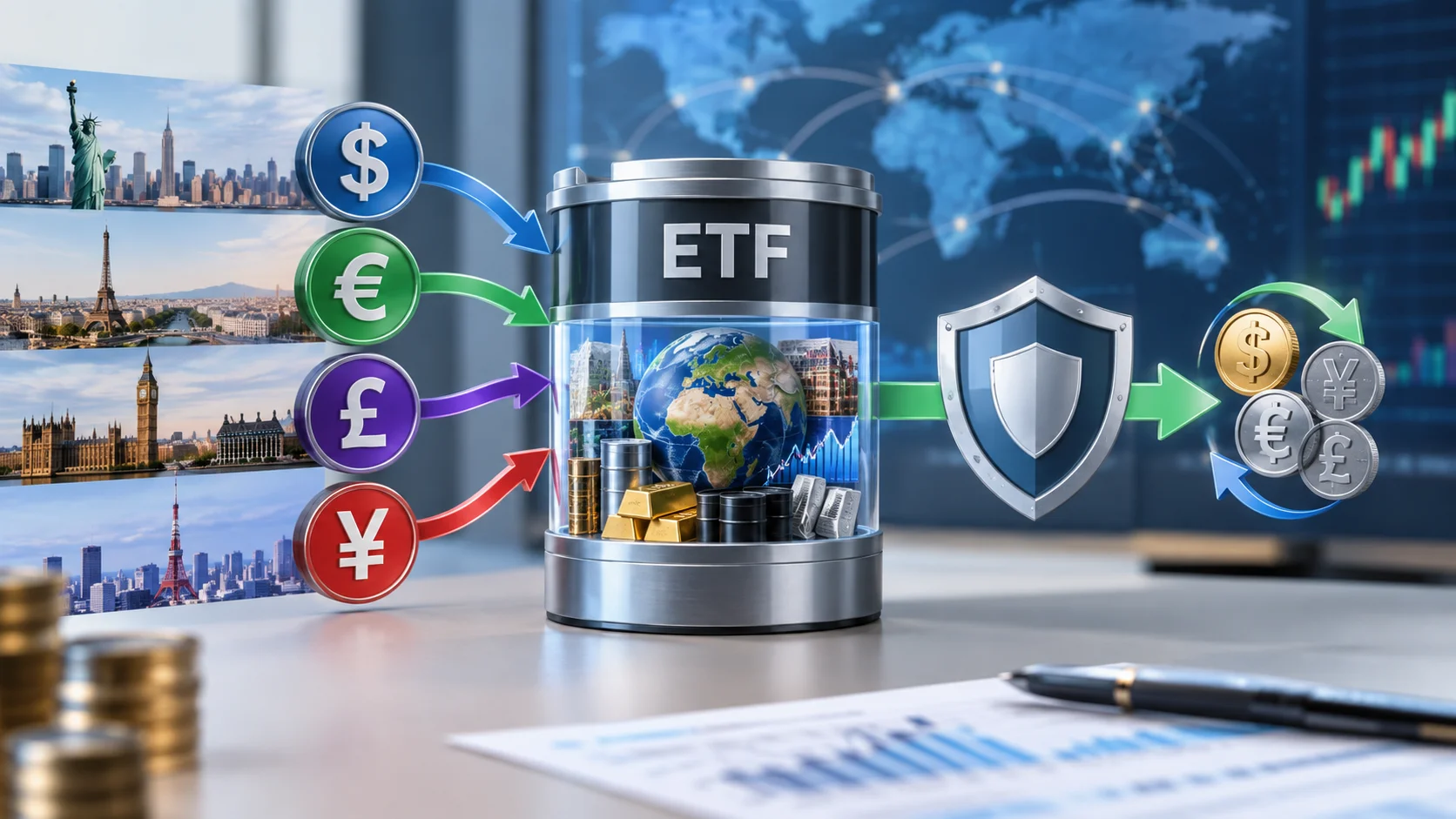
When you invest in international markets, you are actually making two investments at once: one in the foreign stocks or bonds, and another in the foreign currency itself. If you buy shares in a Japanese company, your home currency must first be converted into yen. This means that even if the company's stock price skyrockets, a drop in the value of the yen could wipe out your gains when you convert that money back home.
This double-edged sword is known as currency risk. To neutralize it, many investors turn to currency-hedged exchange-traded funds (ETFs). These funds allow you to capture the performance of international assets while stripping away the unpredictable swings of foreign exchange rates. But how do they actually pull off this financial magic trick?
The Hidden Impact of Exchange Rates
To understand why hedging is necessary, it helps to see how currency fluctuations impact your returns. Imagine you are an investor who buys into an unhedged European stock ETF. Over the year, the underlying European stocks gain 10%. However, during that same time, the euro loses 10% of its value against your home currency.
Because those European stocks are priced in euros, your investment is worth less when converted back to your local money. In this scenario, your actual return would be essentially zero. Conversely, if the euro had strengthened, your returns would have been amplified. Currency moves can easily overshadow the actual performance of the companies you are investing in.
How Hedging Works: The Forward Contract
A currency-hedged ETF works just like a standard international ETF by holding a basket of foreign stocks or bonds. The key difference is that the fund manager adds an extra layer of financial instruments—usually forward contracts—to lock in exchange rates.
A forward contract is a binding agreement between two parties to exchange a specific amount of currency at a predetermined rate on a specific future date. By entering into these contracts, the ETF manager essentially guarantees the exchange rate, usually a month in advance.
Rule of Thumb: Think of a forward contract like an insurance policy for exchange rates. You pay a small premium to ensure that currency swings don't ruin your actual investment returns.
The Monthly Reset
Because forward contracts have an expiration date, currency-hedged ETFs operate on a rolling basis. Most funds use one-month forward contracts. At the end of every month, the fund manager must settle the expiring contracts and purchase new ones for the following month. This process is known as the "roll."
During this reset, the manager adjusts the size of the hedge to match the current value of the ETF's underlying assets. If the stock portfolio grew during the month, the manager buys a slightly larger forward contract for the next month to ensure the entire portfolio remains fully protected.
The Costs of Hedging
While hedging provides peace of mind, it is not free. Investors should be aware of a few distinct costs associated with these funds:
Expense Ratios: Hedged ETFs typically charge slightly higher management fees than their unhedged counterparts because of the extra work required to manage the forward contracts.
Interest Rate Differentials: The cost of a forward contract is heavily influenced by the difference in interest rates between your home country and the foreign country. Depending on these rates, the hedge can either result in a slight drag on returns or generate a modest premium.
Missed Opportunities: Hedging cuts both ways. If the foreign currency appreciates against your home currency, an unhedged ETF would give you a bonus return. A hedged ETF sacrifices this potential upside to protect against the downside.
When Do Hedged ETFs Make Sense?
Deciding whether to use a currency-hedged ETF usually comes down to your expectations for your home currency and your overall timeline.
| Market Scenario | Best ETF Choice |
|---|---|
| Home currency is getting stronger | Hedged ETF (protects against falling foreign currency) |
| Home currency is getting weaker | Unhedged ETF (benefits from rising foreign currency) |
| Long-term hold (10+ years) | Unhedged ETF (currency swings tend to cancel out over long periods) |
Over very long horizons, currency fluctuations often smooth out, meaning the extra costs of hedging might not be worth it for retirement investors. However, if you are investing for a shorter period or want to isolate your investment strictly to the performance of the underlying international companies, a hedged ETF is a valuable tool.
Summary
Currency-hedged ETFs are designed to remove the guesswork of foreign exchange rates from your international investments. By using forward contracts to lock in currency prices on a rolling monthly basis, these funds ensure your returns are driven by the performance of the foreign stocks or bonds, not the whims of the currency market. While they offer excellent protection against a strong home currency, it is important to weigh the slightly higher fees and the potential missed upside before making them a core part of your portfolio.